Best Time of Year to Paint Your House Exterior in Toronto (2026)
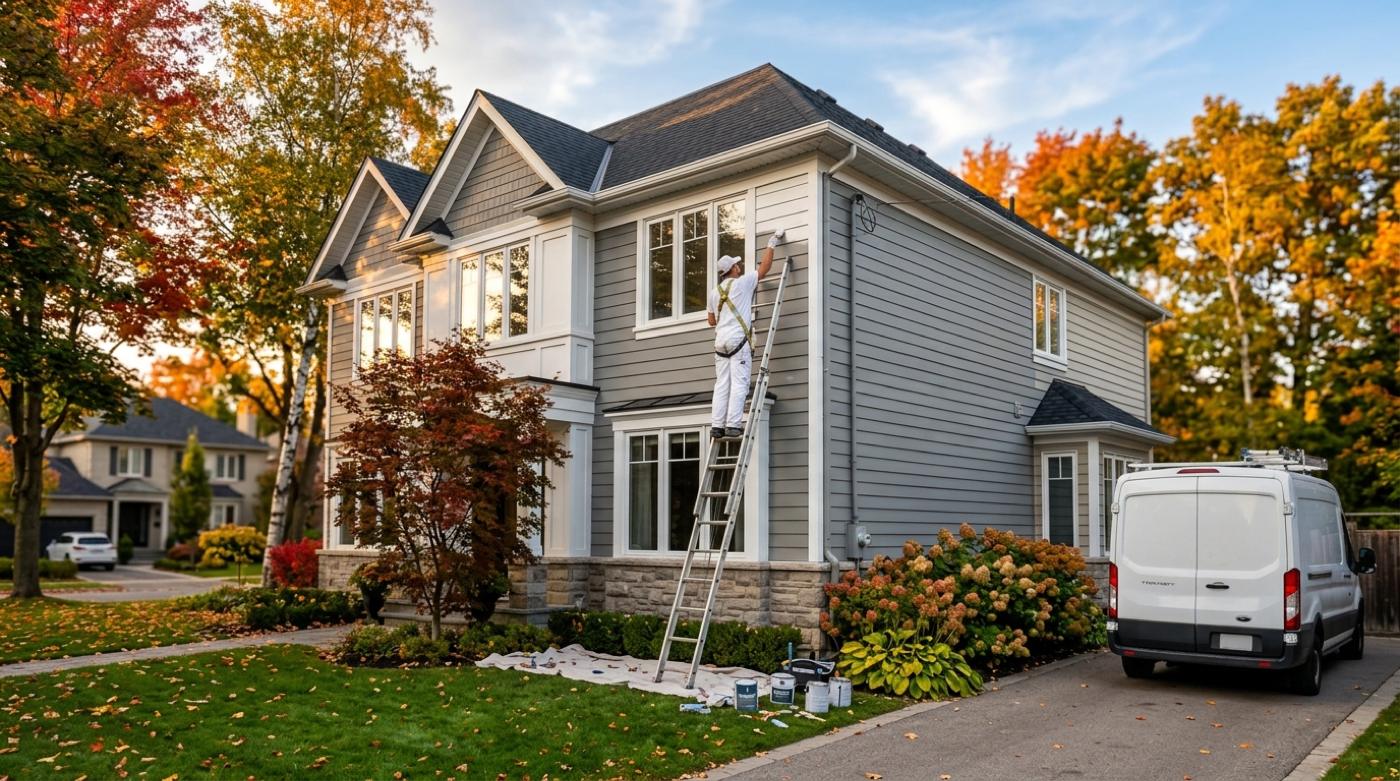
The best time to paint your house exterior in Toronto is late August through early October, when temperatures are 10-25°C and humidity is lower than mid-summer levels. This window gives paint the ideal conditions to cure fully before overnight temperatures start dropping toward freezing in November.
Exterior paint doesn't just need to be applied correctly - it needs the right weather conditions to cure correctly. Temperature, humidity, and rain timing all affect how paint bonds to a surface, and getting the timing wrong is one of the most common, avoidable causes of premature paint failure in Toronto homes. A paint job applied in the wrong conditions can start peeling or blistering within a year or two, even with quality product and good prep work.
This guide breaks down Toronto's exterior painting season month by month, explains why temperature and humidity matter so much for cure quality, and covers the rain and lake-effect factors specific to painting in this climate.
Toronto Exterior Painting Season - Month by Month
| Month | Rating | Notes |
|---|---|---|
| January - March | ❌ Too Cold | Below 5°C - paint won't cure properly. Avoid exterior painting entirely. |
| April | ⚠️ Sometimes OK | Unpredictable - freeze risk at night still common through the month. |
| May | ✅ Good | Warming up steadily. Watch for spring rain and plan around forecasts. |
| June | ✅ Good | Ideal temperatures with manageable humidity most weeks. |
| July | ⚠️ Caution | Can be too hot - above 32°C, paint dries too fast on the surface for good adhesion. |
| August | ✅✅ Best | Ideal temperatures, humidity begins dropping. Peak booking demand starts. |
| September | ✅✅ Best | Peak exterior painting season in Toronto. Book early - crews fill up fast. |
| October | ✅ Good (early-mid) | Good through mid-month. Watch overnight temperatures as the month progresses. |
| November | ❌ Risk | Frost possible, overnight temperatures often near or below curing threshold. Not recommended. |
The clear takeaway: late August through September is Toronto's exterior painting sweet spot, with June as a solid secondary window. Because so many homeowners recognize this and book accordingly, this is also when painting companies are busiest - scheduling early in the summer for a late-August or September slot is the best way to avoid a fall booking crunch.
Why Temperature Matters for Exterior Paint
Paint isn't just decorative - it's a chemical film that needs specific conditions to form correctly as it dries. Most exterior latex paints are formulated to cure between roughly 10°C and 32°C, with many products specifying a hard minimum around 5°C. Outside that range, two different failure modes show up:
Too Cold
Paint applied below the minimum cure temperature doesn't form a proper film. This shows up as poor adhesion, visible brush and roller marks that never smooth out, and paint that fails within a season or two.
Too Hot
Above roughly 32°C, especially on a dark-coloured or south-facing surface, paint dries on the outer surface before it can properly bond underneath. This causes lap marks, uneven sheen, and weaker long-term adhesion.
The ideal application window sits comfortably in the middle - surface and air temperatures between about 10°C and 25°C give paint enough time to level and bond properly without drying so fast that brush strokes set before they can smooth out.
Why Humidity Matters
Humidity affects exterior paint almost as much as temperature does. High humidity slows the evaporation process paint relies on to cure, which can trap moisture beneath the surface film. This leads to a specific defect called flashing - an uneven, blotchy sheen where some areas dry glossier than others - along with a higher risk of blistering as trapped moisture tries to escape after the surface has already skinned over.
Toronto's proximity to Lake Ontario keeps regional humidity elevated through much of the summer compared to more inland parts of Ontario. This is one of the specific reasons late August through September outperforms even a warm July day for exterior painting - by late summer, humidity levels typically start dropping even as temperatures remain comfortable, giving paint the drier air it needs to cure evenly.
Never start exterior painting within 24 hours of a forecasted rain event, and wait at least 24-48 hours after rain before painting a surface that got wet. Painting over damp wood or siding - even if it looks dry on the surface - traps moisture beneath the paint film and is one of the most common causes of peeling and blistering within the first year.
How Toronto's Lake Effect Shapes the Painting Season
Lake Ontario has a measurable moderating and moisturizing effect on weather in Toronto and the surrounding GTA, particularly for homes closer to the shoreline. In practice, this means two things for exterior painting: humidity tends to run higher through summer than it would further inland, and temperature swings tend to be somewhat less extreme - mild in spring and fall relative to areas further from the lake.
For homeowners in lakefront or near-lake neighbourhoods like Port Credit or the Beaches, this often means an even narrower ideal window than the general Toronto guideline, since humidity can linger longer into September in these areas. We factor lake proximity into scheduling recommendations for homes in these neighbourhoods specifically, sometimes favouring a slightly later September or even early October start to let humidity drop further.
Book Your Exterior Painting Slot in Toronto
Late August through September fills up fast. Next Day Painting is currently booking exterior projects for the 2026 peak season - get on the schedule before the fall rush.
Get a Free QuotePlanning Ahead for Next Season
If your exterior paint is already showing signs of wear - chalking, cracking, or peeling - and you've missed this year's ideal window, it's usually better to book early for the following spring or late-summer season rather than force a project into cold or wet conditions. Painting companies' peak-season calendars fill up months in advance in Toronto, and early booking is the single easiest way to guarantee you get an ideal-weather slot rather than whatever's left over in a compressed fall schedule.
For more on how long a properly-timed exterior paint job should last, see our guide on how long exterior paint lasts in Toronto's climate, or explore our exterior painting services to get on the schedule.
Frequently Asked Questions
The best time to paint your house exterior in Toronto is late August through early October, when temperatures typically sit between 10-25°C and humidity is lower than the peak of summer. This window gives paint the ideal conditions to cure fully before overnight temperatures start dropping toward freezing in November.
Yes, but with caution during peak heat. June is generally excellent, with ideal temperatures and manageable humidity. July can be too hot - when surface temperatures exceed 32°C, paint dries too fast on the surface before it can properly bond, leading to lap marks and poor adhesion. Early morning or evening application helps, but late summer into early fall remains the more reliable window.
Most exterior latex paints require surface and air temperatures above 10°C to cure properly, with many products specifying a minimum of 5°C. Below that, paint won't cure correctly, leading to poor adhesion, visible brush marks, and premature failure. Toronto typically sees daytime temperatures drop below this threshold by mid-to-late November, and overnight frost risk begins even earlier in the fall.
Yes, significantly. High humidity slows paint drying time and can cause water to become trapped beneath the surface film, leading to a condition called flashing - an uneven, blotchy sheen - as well as poor adhesion and blistering. Toronto's proximity to Lake Ontario tends to keep humidity elevated through much of the summer, which is one reason late August through September, when humidity typically drops, is the preferred painting window.
Wood and most siding materials need at least 24-48 hours of dry weather after rain before painting, to allow moisture trapped in the material to fully evaporate. Painting over damp surfaces is one of the most common causes of peeling and blistering. We check the extended forecast before starting any exterior project and avoid starting work within 24 hours of a forecasted rain event.